

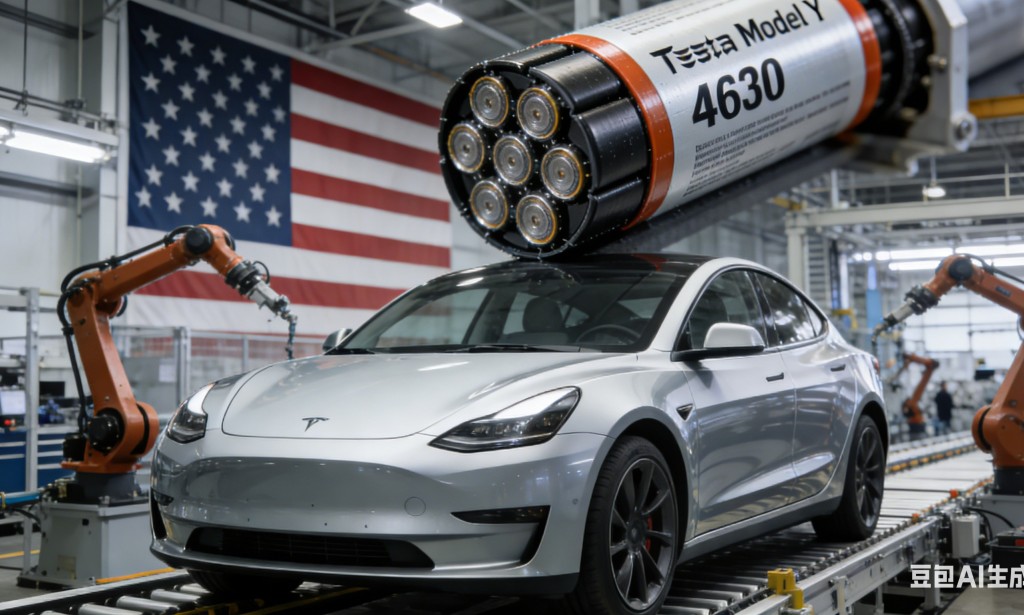

In January 2026, Tesla made a notable strategic pivot by reintroducing its 4680 battery cells into the Model Y lineup, a move that comes after years of ups and downs for the once-hyped battery technology, according to U.S. auto industry insiders and Tesla’s internal production updates. This decision, which flew under the radar initially, has quickly become a hot topic among American investors, auto analysts, and EV enthusiasts, as it touches on core issues like supply chain security, tariff pressures, and the company’s long-term cost-cutting goals.
The 4680 battery, first unveiled by Elon Musk at Tesla’s Battery Day in September 2020, was once hailed as a game-changer that would slash battery costs by 50% and pave the way for a $25,000 affordable EV. However, its mass production journey has been fraught with challenges, and its fate became closely tied to the lackluster sales of the Cybertruck—originally the only model slated to use the 4680 battery. Data shows that Cybertruck deliveries in 2025 totaled just 17,000 units, a far cry from Tesla’s annual target of 250,000, leaving the 4680 battery with severe overcapacity. Meanwhile, Tesla’s Gigafactory Texas has steadily ramped up 4680 production, with weekly output surpassing 1 million cells in January 2026, enough to power 1,200 Model Y vehicles per week. Repurposing the battery for the Model Y, which accounted for 96.7% of Tesla’s total sales in 2025, became the most practical way to absorb excess supply.
A key driver behind this shift is the mounting tariff pressure on battery supplies in the U.S. Since April 2025, the U.S. has imposed a 153% tariff on Chinese-made EV batteries, forcing Tesla to reduce its reliance on imported battery components to avoid soaring production costs. Additionally, under the Inflation Reduction Act (IRA), EVs using Chinese battery parts are ineligible for the $7,500 federal tax credit— a critical competitive advantage in the U.S. market. By producing 4680 batteries locally at Gigafactory Texas, where both cathode and anode materials are manufactured domestically, Tesla can qualify the Model Y for this tax credit, boosting its appeal to American consumers.
This move also reflects a shift in Tesla’s approach to the 4680 battery, from chasing revolutionary cost cuts to prioritizing practicality. While the battery’s cost has dropped by 15% since the start of 2025, it still falls short of the 50% reduction Musk initially promised, and the $25,000 affordable EV plan has been put on hold. Instead, the 2026 Model Y equipped with the 4680 battery offers reliable performance—including a CLTC range of 688km and 243km of charge in 15 minutes—focused on meeting market demand and policy requirements.
U.S. auto analysts note that Tesla’s decision is a pragmatic response to market and policy realities. It not only resolves the overcapacity issue but also strengthens the company’s local supply chain, a top priority amid growing U.S.-China trade tensions. For American investors, the 4680 battery’s return to the Model Y signals Tesla’s focus on operational efficiency, which could stabilize its stock performance after concerns about non-repeatable profits. As Tesla plans to expand 4680 production to its Nevada Gigafactory in 2026, the move is expected to have a ripple effect on the U.S. EV supply chain, boosting demand for local battery material suppliers and manufacturing jobs.
Tesla acknowledged in its Q4 2025 shareholder letter that the 4680 battery’s return to the Model Y is part of efforts to "diversify supply sources and mitigate trade barriers and tariff risks." While the battery may no longer live up to its original hype, its integration into Tesla’s best-selling model highlights the company’s ability to adapt— a trait that will be crucial as it competes in the increasingly crowded U.S. EV market.

You must be logged in to post a comment.