



A patient suffering from Nipah infection is shifted to an intensive care unit of a Nipah isolation ward in Kozhikode Medical College, Kozhikode district, in the southern state of Kerala, India [File:CK Thanseer/Reuters]

An outbreak of the Nipah virus in India’s eastern state of West Bengal has heightened concerns in China and several Southeast Asian countries, prompting them to tighten health screening operations at airports as millions prepare to travel for the Lunar New Year holiday.
Since December 2025, two confirmed cases of the virus have been reported in West Bengal, India’s health ministry said on Wednesday.
Recommended Stories
list of 3 items- list 1 of 3US officially withdraws from the World Health Organization
- list 2 of 3What is the Nipah virus and is it spreading in southern India?
- list 3 of 3Region on watch as India declares Nipah virus outbreak contained
The ministry did not provide details about the people infected but noted that of a total of 196 contacts linked to the confirmed cases, “all traced contacts have been found asymptomatic and have tested negative”, for the virus.
“The situation is under constant monitoring, and all necessary public health measures are in place,” the ministry added.
A district health officer told Reuters that the two people infected in West Bengal in late December were health workers. Both are being treated at a local hospital, the health officer said.
Is the recent outbreak of the virus a cause for concern?
Here’s what we know:
What is the Nipah virus?
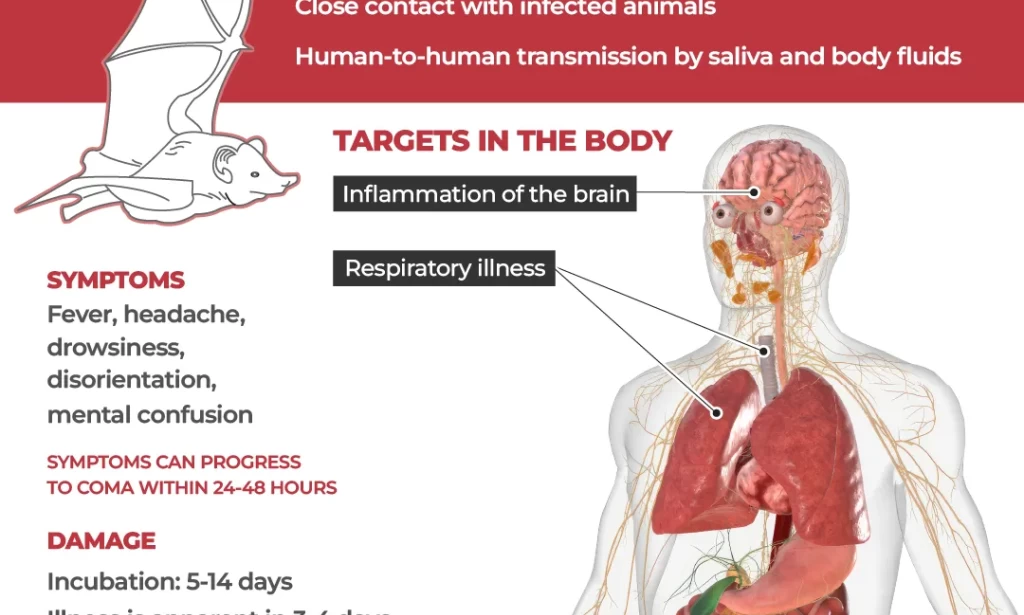
The Nipah virus (NiV) is a zoonotic virus – a disease transmitted from animals such as fruit bats and flying foxes to humans. It can also be transmitted to humans via contaminated food products or directly from person to person.
The virus can be deadly. It typically incubates in the human body for five to 14 days, with symptoms occurring within three to four days.
It causes severe respiratory and neurological disease in humans, progressing from fever and headache to acute encephalitis (brain inflammation) in severe cases, Kaja Abbas, associate professor of infectious disease epidemiology and dynamics at the London School of Hygiene & Tropical Medicine and Nagasaki University, said.

You must be logged in to post a comment.