



Cancer is a group of multifactorial diseases characterized by abnormal cell growth that can invade or spread to other parts of the body. Typically, it develops when cell growth becomes uncontrollable or when DNA damage leads to abnormal cell division.
Genetics and environment are the two primary factors determining cancer risk. While genetic factors are inherited and unchangeable, environmental factors encompass both the broader living environment and personal daily habits. Beyond genetics and external environments, many cancer cases are closely tied to unhealthy lifestyles.
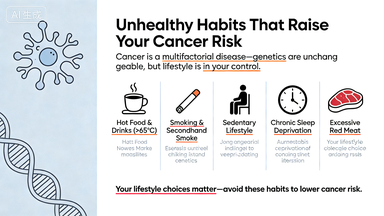
1. Consuming Food or Drinks That Are Too Hot
In many cultures, especially among Chinese communities, people prefer to eat and drink "while it's hot." However, a new study by the International Agency for Research on Cancer (IARC) warns that consuming beverages hotter than 65°C—such as coffee or tea—may increase the risk of esophageal cancer.
The reason? Scalding food and drinks damage the esophageal mucosa. Chronic, repeated damage from long-term consumption of hot foods can trigger chronic inflammation, which in turn raises the likelihood of cancerous changes.
2. Smoking (Including Secondhand Smoke)
Smoking has the strongest established link to lung cancer. Studies show that smokers have a 13.1-fold higher incidence of lung cancer and an 11.5-fold higher mortality rate compared to non-smokers. Even former smokers face elevated risks: their lung cancer incidence and mortality rates are 4.06 and 4.10 times higher than those of non-smokers, respectively. Additionally, the more a person smokes, the greater their lung cancer risk.
Secondhand smoke is also a significant hazard. Exposure to secondhand smoke impairs the growth and development of infants and adolescents, exacerbates respiratory conditions in patients with existing lung diseases, increases the risk of lung adenocarcinoma, and raises the likelihood of cardiovascular and cerebrovascular diseases. Non-smokers exposed to secondhand smoke have a 20-30% higher risk of developing lung cancer, and globally, over 400,000 people die from secondhand smoke exposure each year.
3. Sedentary Lifestyle & Lack of Exercise
For some people, daily life revolves around sitting for work and lying down to sleep—they'd rather take a car than walk, take the elevator than climb stairs, and avoid any form of physical activity. Unfortunately, a long-term lack of exercise significantly increases cancer risk.
Modern office workers are particularly prone to prolonged sitting, often even delaying trips to the bathroom. Combined with a diet high in fat and low in fiber, this slows intestinal peristalsis, prolongs the time feces irritate the intestinal mucosa, and impairs the intestinal immune barrier. As a result, the risk of colorectal cancer increases by approximately 44%.
4. Chronic Sleep Deprivation
For many young people, staying up late has become a habit—whether for gaming, binge-watching shows, or scrolling through short videos. But what they're sacrificing isn't just sleep; it's their health.
Chronic sleep deprivation disrupts hormone levels, leading to abnormal cell metabolism and interfering with normal cell division. This increases the risk of cell mutation and, consequently, cancer.
5. Excessive Meat Consumption
Research has found that high intake of red meat increases the risk of cancers such as colorectal, gastric, and pancreatic cancer. When meat consumption exceeds the body's needs, excess nutrients become a breeding ground for bacteria. Under bacterial action, proteins, fats, and other substances in meat rapidly decompose, producing harmful compounds.
Long-term exposure of the intestinal mucosa to these harmful substances triggers a cycle of "inflammation—necrosis—regeneration." If mucosal cells go astray during the repair process, they can undergo malignant transformation and become cancerous cells.

You must be logged in to post a comment.