



Many women experience dysmenorrhea (menstrual cramps) in daily life. For them, each menstrual period feels like an ordeal—agonizing pain that makes them desperate for it to end as soon as possible.
When suffering from dysmenorrhea, many women choose to endure it, or turn to brown sugar water or painkillers. However, if dysmenorrhea occurs every month and lasts for more than one day per cycle, seeking medical attention promptly is the best option.
Dysmenorrhea is a potential complication of various gynecological conditions, with endometriosis being the most common. Endometriosis is a chronic gynecological disease that frequently affects women of reproductive age. As the name suggests, it refers to the "ectopic" growth of the endometrium—tissue that normally lines the inside of the uterus. For some women, this tissue "wanders" to other parts of the body outside the uterus, such as the abdominal cavity, ovaries, or rectovaginal pouch. In fact, it can occur in almost every part of the body except the spleen.
 Caption
What Causes Endometriosis?
The exact cause of endometriosis remains a mystery to this day. While the "retrograde menstruation" theory is the most widely accepted mechanism, only about 15% of women hospitalized for retrograde menstruation actually develop endometriosis. Clinically, the true incidence of endometriosis is influenced by multiple factors, such as immune dysfunction, menstrual abnormalities, and genetic factors.
What Are the Symptoms?
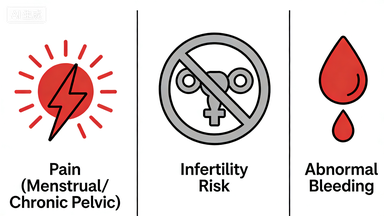
1. Pain
Dysmenorrhea is a common symptom of endometriosis. Patients may also experience other menstrual irregularities during their period, such as increased bleeding, or shortened or prolonged menstrual cycles. Additionally, endometriosis can cause dyspareunia (pain during intercourse) and chronic pelvic pain.
2. Infertility
Approximately 30% to 50% of women with endometriosis struggle with infertility. This is mainly due to pelvic adhesions, blocked fallopian tubes, or weakened fallopian tube peristalsis—all of which interfere with ovulation and egg retrieval. It may also be related to endocrine abnormalities in patients, such as anovulation, luteal phase defect, hyperprolactinemia, or abnormal follicular development.
3. Abnormal Bleeding Outside the Uterus
Endometriotic lesions can invade multiple parts of the body. For example, lesions in the trachea may cause hemoptysis (coughing up blood) during menstruation; lesions in the lungs or pleura may lead to pneumothorax or hemothorax (blood in the chest cavity) during menstruation; and endometriosis in the urinary system may result in hematuria (blood in urine), renal pelvic hematocele, or hydronephrosis (fluid buildup in the kidney) during menstruation.
 Caption
Can It Be Prevented?
Studies have found that endometriosis generally does not occur without retrograde menstruation. Therefore, taking correct measures to avoid retrograde menstruation can help prevent the development of endometriosis to a certain extent.
Experts advise women to pay attention to three key points during menstruation: ① Avoid high-intensity exercise; ② Avoid sexual activity; ③ Maintain menstrual hygiene. Meanwhile, engaging in appropriate exercise during non-menstrual periods can promote blood circulation and enhance the body’s immune capacity.
Although endometriosis is neither an inflammation nor a tumor, it exhibits proliferative characteristics similar to malignant tumors, such as invasiveness, destructiveness, and recurrence. The more severe the condition, the greater the difficulty of treatment.
Therefore, if women frequently experience dysmenorrhea, they should never just "tough it out." Prompt medical consultation is essential to avoid delaying the treatment of endometriosis.

You must be logged in to post a comment.