


Elon Musk, the American billionaire who once said "Mars will land by the end of 2026" and "Mars is a part of the United States," is delaying his plans to land on Mars.
According to the Global Times citing The Times of India, SpaceX founder Elon Musk recently revised his Mars landing mission schedule, significantly reducing the possibility of launching a Starship spacecraft to Mars in 2026. According to the new schedule, the plan is more likely to be implemented from 2028 to 2030 in the future.
For a long time, Musk has been promoting the use of SpaceX's "Starship" spacecraft to carry out the Mars immigration program.
In March of this year, Musk posted on social media that SpaceX's new generation heavy lift launch vehicle, Starship, is expected to land on Mars by the end of 2026. At that time, he half jokingly said that he might go to Mars, but that would also be a part of America.
In May of this year, Musk detailed the development schedule of the "Starship" in a video released by SpaceX and stated that he expects the unmanned "Starship" to fly to Mars before the end of 2026.
According to Musk's plan, SpaceX's goal is to send five unmanned spacecraft to Mars by 2026, "depending on the progress of SpaceX's in orbit refueling technology, which is a key technology required for deep space travel.
Musk said that due to the constantly changing distance between Earth and Mars, the most suitable launch window opens every 26 months, and the next one will appear by the end of next year. SpaceX will fully seize this opportunity, and the probability of achieving the goal is about 50%.
But recently, Musk admitted on social media that there is only a "very small chance" of launching a spacecraft to Mars before the end of 2026.
According to reports, although the 2026 launch window is still technically open, Musk acknowledges that the possibility of Tesla's "Optimus Prime" humanoid robot piloting the "Starship" spacecraft to Mars in November or December next year is very small, and "many things need to be done well to achieve this goal".
According to Musk's new schedule, the first unmanned journey to Mars will be achieved within 3.5 years, and manned flights will be completed within 5.5 years. Based on this calculation, 2028 will be a more realistic goal for SpaceX to launch an unmanned "starship" spacecraft to Mars, while manned flights will take place in 2030, which is four years later than the initial plan.
The Global Times cited an analysis from The Times of India stating that the delay in Musk's Mars landing plan is due to both the engineering challenges of interstellar travel and the technical difficulties of the spacecraft's life support system. The success of this mission also depends on strict testing, approval from regulatory authorities, and how to ensure the safety of astronauts during their long-term journey.
SpaceX has encountered a series of technological setbacks in the "Starship" spacecraft. On May 27th, the "Starship" super heavy rocket failed to launch for the second consecutive time this year. SpaceX is believed to likely require significant design modifications, which also leads to more critical considerations for Mars travel“ 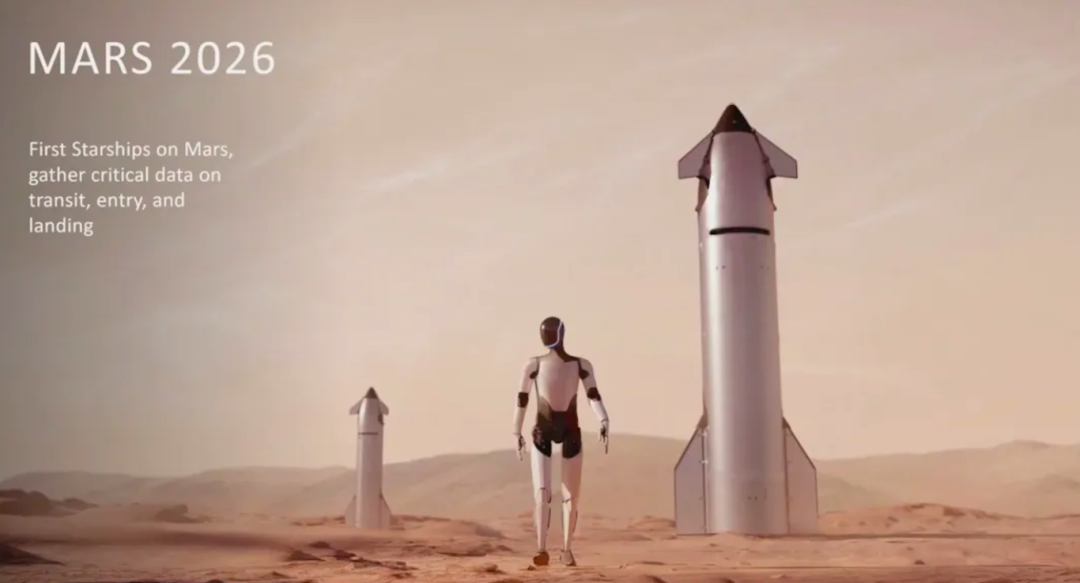
Elon Musk: Plan to land on Mars by the end of 2026 has changed

About Author

You must be logged in to post a comment.