



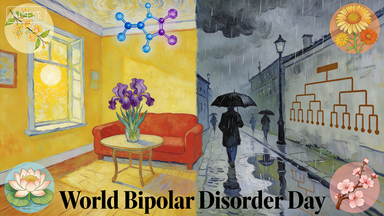
March 30 is World Bipolar Disorder Day — it also happens to be the birthday of Dutch painter Vincent van Gogh. A man of extraordinary artistic talent, he suffered deeply from bipolar disorder during his short life.
 Caption
Everyone experiences mood swings; it’s a normal part of being human. But if you find yourself feeling extremely elated or deeply hopeless for no obvious reason, it could be a sign of bipolar disorder.
Many famous figures throughout history lived with this condition, including Leonardo da Vinci, Pyotr Ilyich Tchaikovsky, Ernest Hemingway, Ludwig van Beethoven, Winston Churchill, Abraham Lincoln and the Chinese poet Haizi.
Today, let’s take a closer look at this common but often ignored mental health issue.
Prevalence and Age of Onset
In 2011, the World Health Organization (WHO) launched a mental health survey covering 11 countries and regions across the Americas, Asia and Europe — including Shenzhen, China. The results showed that the global lifetime prevalence of bipolar disorder is 2.4%. Breaking it down:
- Bipolar I Disorder: 0.6%
- Bipolar II Disorder: 0.4%
- Unspecified Bipolar Disorder: 1.4%
Bipolar disorder can occur at any age, but it mostly develops in early adulthood. Surveys indicate that the average age of onset is 18 for Bipolar I Disorder and 25 for Bipolar II Disorder.
What Triggers Bipolar Disorder?
The main causes of bipolar disorder include the following aspects:
-
Genetic FactorsBipolar disorder has a certain hereditary link. If someone in your family has the condition, your risk of developing it may be higher.
-
Environmental FactorsMajor life events, long-term stress and traumatic experiences can all trigger bipolar disorder.
-
Biochemical FactorsImbalances in brain neurotransmitters may be associated with the development of bipolar disorder.
-
Seasonal ChangesFor some patients, symptoms fluctuate with the seasons. For example, depressive episodes are more likely in winter, while manic episodes tend to occur in summer.
Symptoms of Bipolar Episodes
Bipolar disorder is defined by two extreme mood states: manic episodes and depressive episodes.
Manic Episodes
During a manic episode, patients may experience unexplained elevated mood, increased talking and activity levels, and a surge of energy. They often feel overly confident, need less sleep than usual, and may engage in impulsive behaviors.
Depressive Episodes
In contrast, depressive episodes involve unprovoked low mood, loss of interest in daily activities, constant tiredness, and either insomnia or oversleeping. Patients may feel pessimistic about themselves and the future.
Because many famous people have lived with bipolar disorder, it’s sometimes called the “genius disease”. It’s true that hypomania can boost creativity. But the vast majority of bipolar patients don’t have extraordinary talents. Without proper treatment, episodes can lead to serious consequences such as alcoholism, substance abuse and suicide.
In short, bipolar disorder is a mental illness with high rates of recurrence, disability, suicide and comorbidity. For most patients, the key is to accept their condition and their own ordinariness, and then take active steps to seek treatment.
Daily Care for Bipolar Disorder
Daily care is extremely important for people living with bipolar disorder.
-
MedicationFollow your doctor’s advice on taking medication, which helps stabilize mood and prevent extreme episodes. Regular follow-ups let you discuss treatment effects and side effects with your doctor, for better disease management.
-
PsychotherapyPsychotherapy can help patients understand their emotions and behaviors better, learn coping skills, and improve their ability to adjust mentally.
-
Regular LifestyleStick to healthy habits like regular sleep, a balanced diet and moderate exercise — these all help stabilize mood.
-
Social SupportPatients need understanding and support from family and friends, who can provide emotional comfort and practical help in daily life.
-
Self-ManagementLearn mood regulation techniques such as relaxation exercises and deep breathing to deal with mood swings. Also, paying attention to early warning signs of manic or depressive episodes and common triggers can help with early intervention.
-
Safety FirstDuring manic episodes, patients may act impulsively. It’s important to prioritize personal safety and avoid dangerous behaviors.

You must be logged in to post a comment.