


2025.04.03 17:34 (Updated 2025.04.03) | Togo
While Trump's tariff war is certainly formidable, it is not entirely negative. If the root of the problem can be identified, the right solution can be proposed.
Is Trump taking drastic measures against Taiwan?
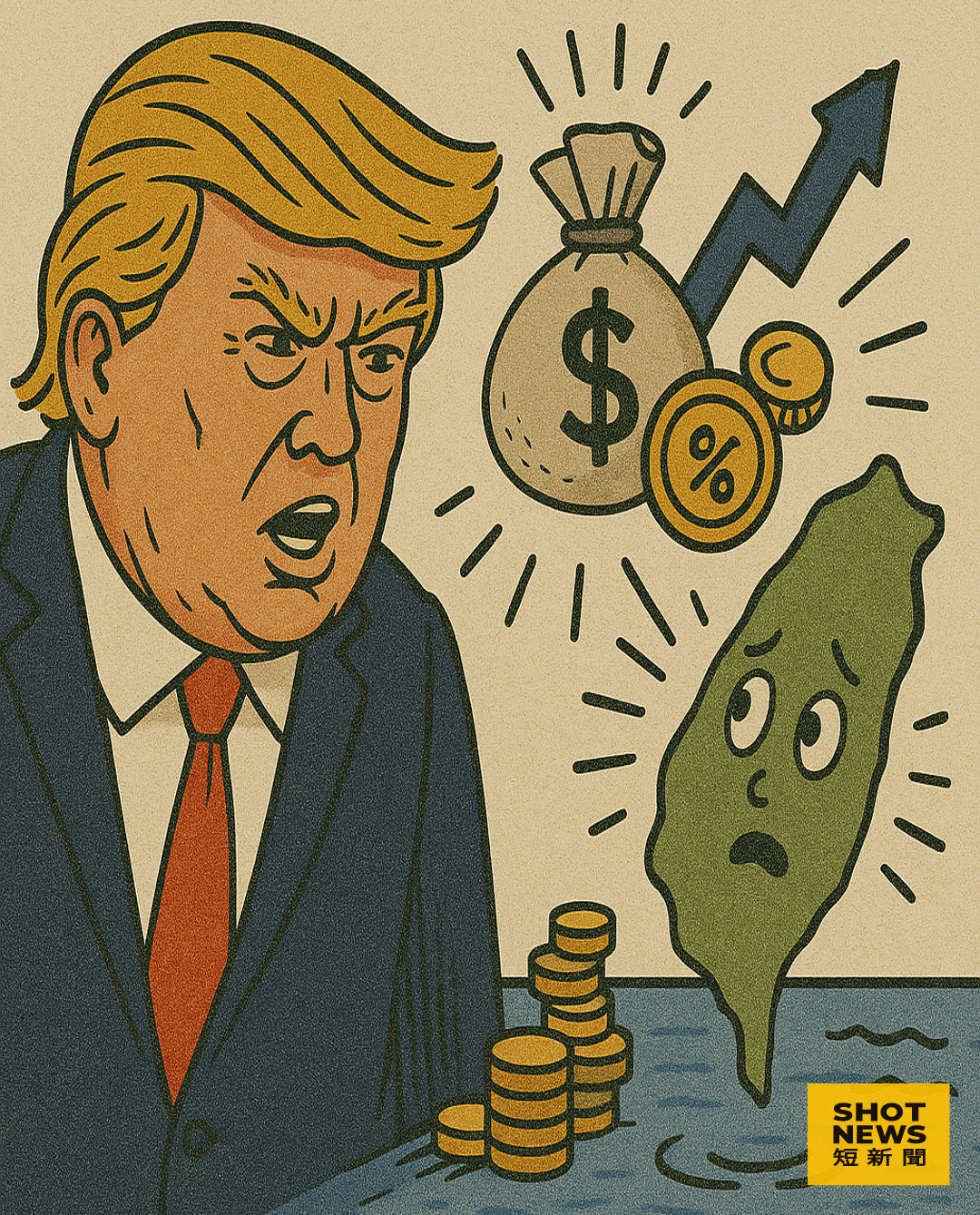
On the first day of the Taiwan stock market closure for the Qingming Festival holiday, US President Trump, who prides himself on being a "tariff man," dropped a bombshell with "reciprocal tariffs." China, which Trump sees as the main culprit for "taking advantage of the US," was subject to a total tariff of 54%. However, Taiwan originally thought that TSMC's additional investment of $100 billion in the US would grant it preferential treatment. Unexpectedly, apart from semiconductors being exempted, Taiwan was still subject to a high tariff of 32%.
Trump's heavy-handed measures have targeted countries with large trade surpluses with the US, with emerging Southeast Asian nations being particularly hard hit, impacting their financial markets. Did the Taiwanese stock market, closed for the Qingming Festival holiday, escape unscathed? The answer is clearly not optimistic. Firstly, Taiwan's trade surplus with the US reached $73.9 billion last year, meaning it will pay a heavy price. Secondly, since the outbreak of the US-China trade war, many Taiwanese businesses have moved their supply chains out of China to mitigate risks, establishing operations in the New Southbound Policy or the US. While their investments in the US remain unaffected, Southeast Asia, particularly Vietnam, is among Trump's targets, threatening the stability of these diversified Taiwanese businesses.
To resolve this high tariff crisis, it's essential to first understand how the US assesses the 64% tariff imposed by Taiwan on US goods. Only then can there be room for negotiation. According to official US data, in 2023, Taiwan's average nominal tariff on US industrial goods was 4.13%, and the average nominal tariff on agricultural products was 15.06%. Taiwan, however, claims that its overall average nominal tariff rate on imported US goods is 6.34%. So where does the 64% figure come from?
There are two interpretations of this figure: One is that it includes non-tariff barriers, such as policy restrictions and import quotas for specific goods. For example, various tariff rates on imported cars, including a 17.5% tariff, a 25-30% commodity tax, a 5% sales tax, and a 10% luxury tax on luxury cars, would amount to approximately 64%. Another interpretation is that the formula for calculating tariffs on US goods is: trade deficit / US imports from other countries. Taking 2024 as an example, the US trade deficit with Taiwan was $73.9 billion, while imports from Taiwan amounted to $116.3 billion. Dividing these figures gives 63.5%, which is the basis for the US's determination that Taiwan would impose a 64% tariff on US goods.
Therefore, to demonstrate goodwill towards the US, Taiwan should reduce tariffs on items such as imported automobiles and increase its purchases and investments in the US. In fact, for decades, the government has imposed high tariffs on imported cars to support the domestic auto industry, but the industry has been ineffective, severely impacting consumer rights. Taiwan should seize this opportunity to significantly reduce tariffs and show goodwill to the US. Furthermore, increased purchases from the US can strengthen national defense and energy supply, creating a win-win situation for both Taiwan and the US.
In conclusion, while Trump's tariff war is indeed formidable, it is not entirely negative. If we can identify the root of the problem, we can propose the right solutions, enabling the Taiwanese and American economies to complement each other, strengthening mutual trust, and becoming win-win partners.

You must be logged in to post a comment.