


When it comes to fitness goals, a strong, defined core is at the top of most people’s lists. But here’s the truth: abs aren’t just for aesthetics. A solid core is the foundation of nearly every movement—from lifting weights and running to bending down to tie your shoes. It improves posture, reduces lower back pain, enhances athletic performance, and even supports better digestion. Yet with countless ab exercises flooding social media—crunches, planks, leg raises, Russian twists—it’s hard to separate the effective moves from the gimmicks. That’s why we’ve created this ultimate ranking of ab exercises, based on scientific EMG data, muscle activation, and real-world results. Whether you’re a beginner looking to build core strength or an advanced lifter aiming for chiseled abs, this guide will help you focus on the moves that actually deliver results.
Ranking Criteria: How We Selected the Best Ab Exercises
Not all ab exercises are created equal. Your core is a complex system of muscles, including the rectus abdominis (the “six-pack” muscles), obliques (side abs), transverse abdominis (deep core stabilizer), and lower abs. To create this ranking, we evaluated each exercise against six key criteria to ensure they’re worth your time:
• EMG Data: We relied on electromyography studies to measure how effectively each exercise activates core muscles. Higher EMG readings mean more muscle fibers are engaged, leading to better growth and strength gains.
• Strength & Size Building: Exercises that build both core strength (ability to generate force) and muscle size (hypertrophy) ranked higher, as they deliver dual benefits.
• Versatility: The best ab exercises work for all fitness levels—beginners can modify them, while advanced lifters can add intensity.
• Functionality: Exercises that translate to real-life movements (e.g., stabilizing your body during lifts or daily tasks) scored higher than isolated, non-functional moves.
• Low Injury Risk: We prioritized exercises that put minimal strain on the lower back, a common area of injury in ab training when form is poor.
• Hormone Impact: While ab exercises don’t boost hormones as much as compound leg or back moves, those that engage multiple muscle groups (and thus trigger a milder hormone response) got a slight edge.
Top 8 Ab Exercises: Ranked from Most to Least Effective
After evaluating dozens of exercises against our criteria, these 8 moves emerged as the best for building a strong, defined core. Each targets different parts of your abs, so combining them will ensure full-core development.
No.1: Plank – The King of Core Stability
The plank takes the top spot because it’s the single most effective exercise for building full-core stability. Unlike crunches (which only target the upper abs), planks engage your entire core—rectus abdominis, obliques, transverse abdominis, and even your lower back and glutes. EMG studies show planks activate the deep core muscles (critical for stability) more than any other ab exercise.
How to do it: Start in a push-up position, but rest on your forearms instead of your hands. Keep your body in a straight line from head to heels—no sagging hips or raised butt. Engage your core by pulling your belly button toward your spine, and squeeze your glutes. Hold this position for 30-60 seconds per set. Aim for 3-4 sets.
Key form tip: Avoid rounding your shoulders or letting your lower back sag—this reduces core activation and strains your spine. Imagine someone is about to kick you in the stomach, and brace your core accordingly.
Modifications & Progressions: Beginners can drop to their knees to reduce difficulty. Advanced lifters can add intensity with side planks (target obliques), plank shoulder taps (add instability), or weighted planks (place a dumbbell on your back).
No.2: Hanging Leg Raises – The Queen of Lower Abs
Lower abs are often the hardest part of the core to target, but hanging leg raises do it better than any other exercise. This move engages the lower rectus abdominis and hip flexors, while also requiring your upper core to stabilize your body. EMG data shows hanging leg raises activate the lower abs 2x more than traditional leg raises done on the floor.
How to do it: Hang from a pull-up bar with your arms fully extended, hands shoulder-width apart. Keep your body straight and core braced. Slowly raise your legs until they’re parallel to the floor (or higher, if flexibility allows), then lower them slowly back to the starting position. Do 3-4 sets of 10-15 reps.
Key form tip: Don’t swing your legs or use momentum—this takes tension off your abs. Keep the movement slow and controlled, focusing on squeezing your lower abs as you raise your legs.
Modifications: If hanging is too hard, use an assisted pull-up machine or do knee raises instead of leg raises (bend your knees to reduce weight). Advanced lifters can add a twist at the top (rotate your hips to target obliques) or hold a dumbbell between your feet.
No.3: Russian Twists – Best for Obliques & Rotational Strength
Russian twists are the top exercise for targeting your obliques (side abs) and building rotational core strength—critical for movements like swinging a bat or lifting heavy objects from the side. This move also engages your upper abs and transverse abdominis, making it a great full-core exercise.
How to do it: Sit on the floor, lean back 45 degrees, and lift your feet off the ground (bend your knees if needed). Hold a dumbbell or medicine ball with both hands in front of your chest. Rotate your torso to the right, tapping the weight to the floor beside your hip, then rotate to the left and tap the weight to the floor on that side. That’s one rep. Do 3-4 sets of 15-20 reps (per side).
Key form tip: Keep your core tight throughout the movement—don’t lean back too far (this strains your lower back) or let your feet touch the floor (reduces core activation).
Variations: For more intensity, lift your feet higher or use a heavier weight. For beginners, keep your feet on the floor to stabilize your body.
No.4: Captain’s Chair Leg Raises – Target Lower Abs & Hip Flexors
The captain’s chair leg raise is a close cousin to hanging leg raises, and it’s perfect for anyone who struggles with hanging from a bar. It uses a gym machine (captain’s chair) to support your upper body, allowing you to focus purely on contracting your lower abs. EMG studies show it activates the lower abs nearly as effectively as hanging leg raises.
How to do it: Stand in a captain’s chair, grip the handles, and lift your body so your legs are off the ground and your back is pressed against the pad. Keep your core braced. Slowly raise your legs until they’re parallel to the floor, then lower them slowly. Do 3-4 sets of 12-15 reps.
Modification: If full leg raises are too hard, bend your knees and do knee raises instead. Advanced lifters can add a twist (rotate your hips to target obliques) or raise your legs higher than parallel.
No.5: Bicycle Crunches – Full-Ab Activation
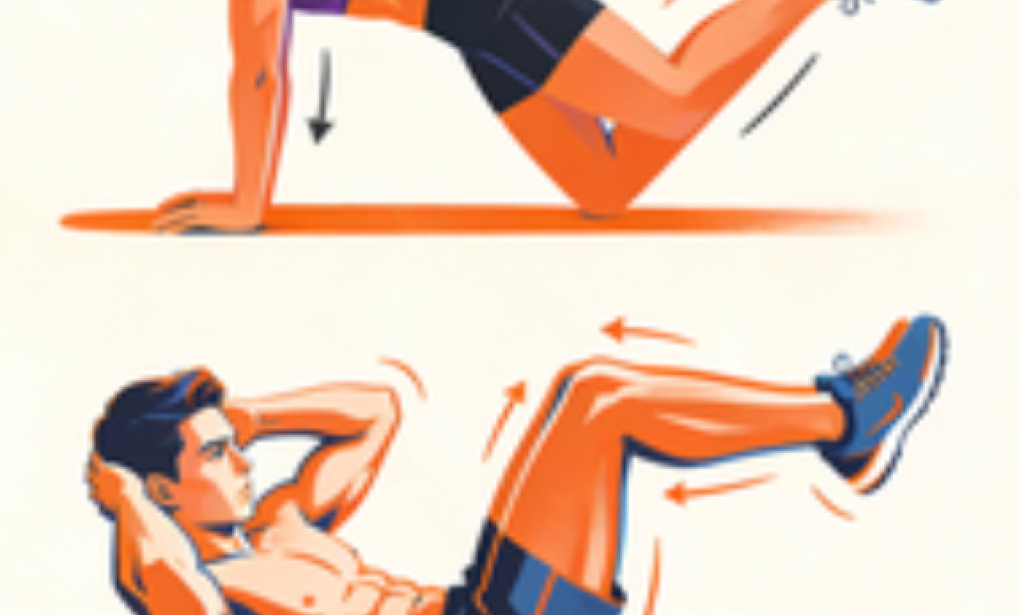
Bicycle crunches are a classic ab exercise for a reason—they target your upper abs, lower abs, and obliques all at once. Unlike traditional crunches (which only hit the upper abs), bicycle crunches add a rotational element that engages your obliques, making them a more well-rounded move.
How to do it: Lie on your back, hands behind your head (don’t pull your neck), and lift your shoulders off the floor. Bend your knees and lift your feet off the ground. Bring your right elbow toward your left knee, while extending your right leg straight out. Then switch sides: bring your left elbow toward your right knee, extending your left leg. That’s one rep. Do 3-4 sets of 15-20 reps (per side).
Key form tip: Avoid pulling your neck with your hands—this can cause neck pain. Focus on using your abs to pull your shoulders off the floor. Keep the movement slow and controlled, not fast and jerky.
No.6: Mountain Climbers – Cardio + Core Combo
Mountain climbers are unique because they combine core training with cardio, making them perfect for burning fat (which reveals your abs) while building core stability. This move engages your entire core, as well as your shoulders, chest, and legs, making it a great full-body exercise.
How to do it: Start in a high plank position (hands under shoulders, body straight). Engage your core. Bring your right knee toward your chest, then quickly switch to bring your left knee toward your chest—like you’re running in place. Keep your body stable and avoid sagging or raising your hips. Do 3-4 sets of 30-60 seconds.
Key form tip: Don’t rush the movement—focus on keeping your core tight and your body in a straight line. The faster you go, the more cardio benefit you’ll get, but form should always come first.
Variation: For more core activation, slow down the pace and hold each knee drive for 1-2 seconds.
No.7: Reverse Crunches – Lower Abs Focus
Reverse crunches are a great lower abs exercise for beginners or anyone with lower back issues. Unlike traditional crunches (which can strain the lower back), reverse crunches are gentler on the spine while still effectively targeting the lower rectus abdominis.
How to do it: Lie on your back, knees bent, feet flat on the floor, hands at your sides or under your hips (for support). Engage your core. Lift your feet off the floor, keeping your knees bent at 90 degrees. Slowly pull your knees toward your chest, lifting your hips off the floor. Hold for 1 second, then slowly lower your hips and feet back to the starting position. Do 3-4 sets of 12-15 reps.
Key form tip: Keep your lower back pressed against the floor as much as possible—this reduces strain and increases lower ab activation.
No.8: Side Plank – Oblique & Lateral Stability
The side plank is the best exercise for targeting your obliques and building lateral core stability (the ability to stabilize your body from side to side). It’s often overlooked, but strong obliques are key for a balanced core and preventing lower back pain.
How to do it: Lie on your right side, right forearm on the floor under your shoulder, legs straight. Lift your hips off the floor, keeping your body in a straight line from head to feet. Engage your core and squeeze your glutes. Hold for 20-30 seconds, then switch to your left side. Do 3-4 sets per side.
Modification: Bend your bottom knee and place it on the floor for more stability. Advanced lifters can lift your top leg or hold a dumbbell on your hip for added intensity.
Sample Weekly Ab Routine (2x/Week, Balance Compound/Isolation)
To build a strong, defined core, you don’t need to train abs every day—overtraining can lead to muscle fatigue and reduced progress. Instead, train your core 2x per week, focusing on a mix of compound (stability-focused) and isolation (muscle-targeting) exercises. Here’s a sample routine based on our ranking, designed to hit all parts of your core:
• Workout 1 (Stability & Lower Abs Focus): 1. Plank (3x45 seconds), 2. Hanging Leg Raises (3x12 reps), 3. Russian Twists (3x15 reps per side), 4. Reverse Crunches (3x15 reps), 5. Side Plank (3x30 seconds per side)
• Workout 2 (Rotational & Upper Abs Focus): 1. Captain’s Chair Leg Raises (3x12 reps), 2. Bicycle Crunches (3x15 reps per side), 3. Mountain Climbers (3x45 seconds), 4. Side Plank with Leg Lift (3x20 seconds per side), 5. Plank Shoulder Taps (3x30 seconds)
Remember to apply progressive overload to keep challenging your core: add time to planks, increase the weight for Russian twists, or try advanced variations (like weighted hanging leg raises) as you get stronger. For example, if you can hold a plank for 60 seconds easily, try a side plank with leg lift next time.
Common Ab Training Mistakes to Avoid
Even with the best exercises, bad form can hold you back and cause injury. Here are the most common ab training mistakes to steer clear of:
• Pulling Your Neck During Crunches: Many people pull their neck with their hands during crunches, which causes neck pain and reduces ab activation. Keep your hands behind your head for support, but don’t pull—use your abs to lift your shoulders.
• Swinging or Using Momentum: Swinging your legs during leg raises or using momentum during crunches takes tension off your abs and increases injury risk. Always keep movements slow and controlled.
• Neglecting the Deep Core: Focusing only on “six-pack” exercises (like crunches) ignores the transverse abdominis, your deep core stabilizer. Planks and side planks are critical for building a strong deep core.
• Training Abs Every Day: Abs are a muscle group, and they need 48 hours of rest to recover and grow. Training them every day leads to overtraining and slower progress.
• Forgetting About Diet: You can do all the ab exercises in the world, but you won’t see your abs if they’re covered in fat. A calorie deficit and high-protein diet are essential for revealing your core.
Conclusion: Consistency & Nutrition Are Key to Chiseled Abs
Building a strong, defined core takes time, consistency, and the right approach. The exercises in this ranking are proven to work, but they won’t deliver results overnight. Focus on mastering form first, then gradually add intensity with progressive overload. And remember: abs are made in the kitchen. To reveal your hard-earned abs, you need to maintain a moderate calorie deficit (300-500 calories below your TDEE) and eat enough protein (1.6-2.2g per kg of body weight) to preserve muscle mass.
Don’t get discouraged if you don’t see results right away—core development takes 8-12 weeks of consistent training and diet. Celebrate small wins: being able to hold a plank longer, lifting more weight during Russian twists, or noticing better posture in your daily life.
If you’re a beginner, start with the modified versions of these exercises and build your way up. Advanced lifters can challenge themselves with the progressive variations to keep their core training fresh and effective.
What’s your biggest challenge when it comes to training abs? Do you struggle with any of the moves in this ranking? Let me know in the comments below—I’d love to help you improve!

You must be logged in to post a comment.