

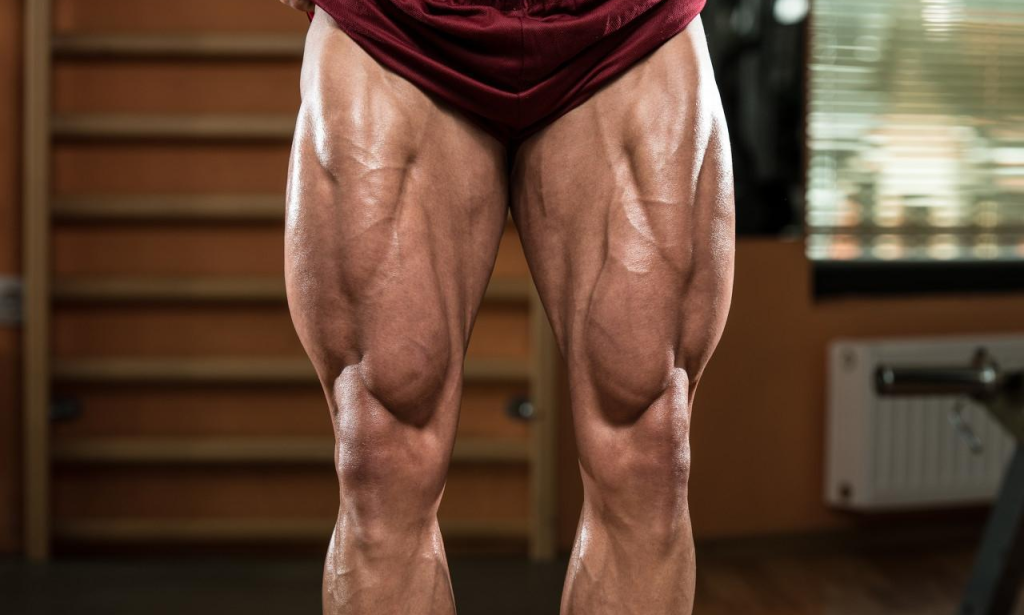

强壮双腿的重要性
1. 提升运动表现
强壮的双腿是各项运动运动员的动力源泉。在田径运动中,短跑运动员依靠股四头肌和腘绳肌的爆发力,从起跑器上疾驰而出,并保持高速奔跑。例如,世界著名短跑运动员尤塞恩·博尔特就拥有发达的下肢,这使他每一步都能产生惊人的力量。他强健的腿部肌肉让他能够以破纪录的速度跑完100米。
另一方面,长跑运动员需要腿部肌肉的耐力。在长距离奔跑中,小腿肌肉、股四头肌和腘绳肌需要持续的收缩和放松,这需要力量和耐力。长跑多枚金牌得主莫·法拉赫(Mo Farah)通过训练,使腿部肌肉能够承受马拉松和5000米比赛的严苛考验。他强壮的双腿不仅帮助他保持稳定的配速,还能让他在比赛的最后冲刺阶段加速前进。
在篮球和足球等团队运动中,球员需要快速跳跃、转身和冲刺。腿部力量强的篮球运动员能跳得更高,抢篮板和扣篮都更容易。一项针对职业篮球运动员的研究发现,腿部力量更强的运动员垂直跳跃能力更高,这对于抢篮板和盖帽至关重要。在足球运动中,球员的腿部力量决定了他们能否快速冲刺、转身和大力射门。
2. 新陈代谢加快
腿部拥有人体最大的几组肌肉,包括股四头肌、腘绳肌和臀大肌。这些肌肉在训练后体积和密度都会增加,这个过程被称为肌肉肥大。肌肉组织代谢活跃,即使在休息时也会燃烧卡路里。研究表明,每增加一磅肌肉,身体每天就能额外燃烧30-50卡路里。
以腿部为重点的训练,例如深蹲、弓步和硬拉,可以同时锻炼多个肌群。与孤立训练相比,这些复合训练能刺激更强的代谢反应。发表在《力量与体能研究杂志》上的一项研究发现,进行腿部训练循环后,参与者的代谢率在训练后长达48小时内都会保持较高水平。这意味着,即使腿部训练结束后,你的身体仍然会以较高的速率燃烧卡路里,从而有助于整体体重管理和脂肪减少。
3. 改善姿势和平衡
腿部在维持正确的姿势和平衡方面起着至关重要的作用。腿部肌肉无力会导致驼背、头部前倾和腰椎前凸等姿势问题。这些姿势问题不仅影响我们的外貌,还会给关节和脊柱带来额外的压力,长期以往会导致疼痛和不适。
强壮的腿部肌肉,尤其是臀肌和小腿肌肉,有助于保持身体的正确姿势。例如,臀肌负责髋关节伸展,并帮助骨盆保持中立位置。当臀肌无力时,骨盆可能会向前倾斜,导致下背部拱起,进而引发下背部疼痛。通过深蹲和臀桥等练习来加强臀肌,我们可以纠正这种不平衡,改善体态。
平衡能力对于日常活动和预防跌倒至关重要,尤其随着年龄增长更是如此。腿部肌肉与核心肌群协同工作,维持身体平衡。单腿深蹲和保加利亚分腿蹲等挑战平衡能力的练习,有助于增强腿部肌肉的力量和协调性,从而提升整体平衡能力。一项针对老年人的研究发现,与不运动的人相比,经常进行腿部力量和平衡训练的人跌倒风险显著降低。
In conclusion, having strong legs is not just about looking good in a pair of shorts. It has far - reaching benefits for our athletic performance, metabolism, and overall physical well - being. By understanding the importance of leg strength and incorporating scientific leg - training methods into our fitness routines, we can unlock a healthier, more active lifestyle.
Understanding the Anatomy of the Legs
Before delving into leg - training methods, it's crucial to understand the anatomy of the legs. The legs are composed of several major muscle groups, each with its own unique functions and roles in movement and training.
Quadriceps
The quadriceps femoris, often simply referred to as the quads, are located at the front of the thigh. This muscle group consists of four individual muscles: the rectus femoris, vastus lateralis, vastus medialis, and vastus intermedius.
• The rectus femoris is the only muscle in the group that crosses both the hip and the knee joints. It plays a significant role in hip flexion and knee extension. For example, when you perform a high - knee running motion, the rectus femoris contracts to lift your thigh upwards (hip flexion) and straighten your leg at the knee (knee extension).
• The vastus lateralis is the largest of the quadriceps muscles and is located on the outer side of the thigh. It is a key muscle in knee extension, especially when force is required, such as in jumping or squatting.
• The vastus medialis, on the inner side of the thigh, also contributes to knee extension. It is particularly important for maintaining the stability of the patella (kneecap) during movement. Weakness in the vastus medialis can lead to patellar tracking problems and knee pain.
• The vastus intermedius lies deep beneath the rectus femoris and also aids in knee extension.
In activities like squats, all four quadriceps muscles work together. As you lower your body, they eccentrically contract (lengthen while under tension) to control the movement, and as you rise back up, they concentrically contract (shorten) to extend the knees and lift your body.
Hamstrings
The hamstrings are a group of three muscles located at the back of the thigh: the biceps femoris, semitendinosus, and semimembranosus.
• The biceps femoris has a long head and a short head. It is involved in knee flexion and hip extension. In a sprint start, the biceps femoris contracts forcefully to extend the hip and flex the knee, propelling the body forward.
• The semitendinosus and semimembranosus also contribute to knee flexion and hip extension. They are important for movements such as walking, running, and climbing stairs. These muscles work in opposition to the quadriceps. For instance, when you bend your knee to sit down, the hamstrings contract while the quadriceps relax. In activities like deadlifts, the hamstrings play a crucial role in hip extension, helping to lift the weight by straightening the hips.
Calf Muscles
The calf muscles are made up of two main muscles: the gastrocnemius and the soleus.
• The gastrocnemius is the larger, more superficial muscle. It has two heads that originate from the femur and insert into the Achilles tendon. This muscle is responsible for plantar flexion of the ankle, which is the movement of pointing your toes downwards. It is highly active in activities like jumping, running, and standing on your tiptoes. For example, when a basketball player jumps for a rebound, the gastrocnemius contracts forcefully to generate the upward thrust.
• The soleus lies deeper beneath the gastrocnemius. It also contributes to plantar flexion but is more active during sustained activities such as walking or running for long distances. The soleus helps to maintain the body's balance and stability during these activities.
Understanding the functions and interactions of these muscle groups is essential for designing an effective leg - training program. By targeting each muscle group appropriately, you can ensure balanced muscle development, improved performance, and reduced risk of injury. A simple muscle diagram (you can insert a basic image here showing the front and back views of the leg with the quadriceps, hamstrings, and calf muscles labeled) can further clarify the location and appearance of these muscles, making it easier to visualize how they work during different exercises.
Principles of Scientific Leg Training
Progressive Overload
Progressive overload is a fundamental principle in leg training and, indeed, in all strength - training endeavors. It involves gradually increasing the demands placed on the muscles over time to stimulate growth and adaptation. When you first start leg training, your muscles are accustomed to a certain level of stress. As you consistently expose them to greater stress, they respond by growing stronger and larger.
One way to apply progressive overload is by increasing the weight you lift. For example, if you initially start with a 10 - kilogram dumbbell for lunges, as you get stronger and can perform the desired number of repetitions with relative ease, you can increase the weight to 12 kilograms. This forces your leg muscles to work harder to overcome the increased resistance, leading to muscle growth. However, it's important not to increase the weight too rapidly. A general guideline is to increase the weight by about 5 - 10% when you can perform 2 - 3 more repetitions than your initial goal for a particular exercise.
Another method is to increase the number of repetitions. Let's say you start with 10 repetitions of squats. As your endurance and strength improve, you can gradually increase the number of repetitions to 12, 15, or more. This challenges your muscles in a different way, focusing more on muscle endurance and also contributing to muscle growth.
Increasing the number of sets is also effective. If you initially perform 3 sets of leg press, you can progress to 4 or 5 sets as your body adapts. This increases the overall volume of work your muscles do, which in turn stimulates greater muscle development.
You can also increase the difficulty of the exercise. For instance, starting with regular squats, you can progress to single - leg squats. Single - leg squats are much more challenging as they require greater balance, stability, and strength from each leg individually. This forces your leg muscles to work in a more complex and demanding way, promoting further growth and development.
Variety in Exercises
Variety in leg - training exercises is crucial for several reasons. Firstly, different exercises target different aspects of the leg muscles. By incorporating a diverse range of exercises, you can ensure balanced muscle development and prevent muscle imbalances, which can lead to injury.
Squats are a classic leg - training exercise that primarily targets the quadriceps, hamstrings, and glutes. They engage multiple muscle groups simultaneously, making them a compound exercise. There are different variations of squats, such as front squats, which place more emphasis on the quadriceps, and Bulgarian split squats, which work on leg strength, balance, and also target the glutes and hamstrings more intensively.
Lunges are another great exercise for the legs. Forward lunges, reverse lunges, and side lunges all target different areas of the legs. Forward lunges mainly work the quadriceps, hamstrings, and glutes of the front leg, while reverse lunges focus on the hamstrings and glutes of the back leg. Side lunges target the inner and outer thighs, as well as the glutes.
Deadlifts, especially Romanian deadlifts, are excellent for strengthening the hamstrings and glutes. They involve a hip - hinge movement, which requires the hamstrings and glutes to contract forcefully to lift the weight. This exercise also engages the lower back muscles, providing a comprehensive lower - body workout.
Calf - raises are specifically designed to target the calf muscles. Standing calf - raises mainly work the gastrocnemius, while seated calf - raises focus more on the soleus. By including both types of calf - raises in your routine, you can ensure that both calf muscles are well - developed.
In addition to these compound exercises, isolation exercises can also be beneficial. For example, leg curls isolate the hamstrings, allowing you to specifically target and strengthen this muscle group. Leg extensions isolate the quadriceps, which can be useful for developing muscle definition and strength in this area.
Proper Form and Technique
Maintaining proper form and technique during leg training is of utmost importance. Correct form not only maximizes the effectiveness of the exercise but also reduces the risk of injury.
When performing squats, for example, your feet should be shoulder - width apart or slightly wider, with your toes turned out slightly. As you lower your body, keep your back straight, engage your core muscles, and make sure your knees do not go past your toes. If your knees go past your toes, it can place excessive stress on the knee joints, increasing the risk of injury. Also, make sure you lower your body until your thighs are parallel to the ground or slightly lower. This ensures that you are fully engaging the leg muscles.
In lunges, your front knee should not go past your front toes. Keep your back straight and your core engaged. Lower your body until both knees are bent at approximately 90 - degree angles. If your form is incorrect, such as having your front knee collapse inward, it can cause knee pain and also reduce the effectiveness of the exercise.
For deadlifts, keep your back straight, your shoulders over the bar, and your knees slightly bent. Lift the weight by driving through your heels and extending your hips and knees simultaneously. Do not round your back during the lift, as this can put a lot of stress on your lower back and increase the risk of injury.
To maintain proper form, it can be helpful to start with a light weight and focus on perfecting the movement before gradually increasing the weight. You can also work with a personal trainer or watch online tutorials by fitness experts to learn the correct form for each exercise. Additionally, paying attention to your body's signals during the exercise is crucial. If you feel pain or discomfort, stop the exercise immediately and check your form or consult a professional.
A Comprehensive Leg Training Routine
Warm - up
Before diving into intense leg exercises, a proper warm - up is essential. A good warm - up increases blood flow to the muscles, raises the body's core temperature, and prepares the joints for movement, reducing the risk of injury.
Dynamic stretching is an excellent warm - up method for leg training. For example, leg swings can be very effective. Stand next to a wall or a stable support for balance. Swing one leg forward and backward in a controlled motion, keeping the leg straight. Do 10 - 15 swings for each leg. This helps to loosen up the hip flexors, hamstrings, and quadriceps. Another dynamic stretch is the high - knee jog. Jog in place, bringing your knees up as high as you can with each step. Try to maintain a quick and steady pace for about 30 seconds to 1 minute. This warms up the entire lower body, including the calves.
Jumping jacks are also a great full - body warm - up that engages the leg muscles. Do 20 - 30 jumping jacks in a row. They increase heart rate and warm up the leg muscles, especially the quadriceps, hamstrings, and calves.
A light jog for 5 - 10 minutes is another option. It gradually elevates the heart rate and warms up the leg muscles, preparing them for more strenuous exercise. You can jog on a treadmill or outdoors, but make sure to choose a safe and flat surface.
Squats and Variations
Squats are often considered the king of leg exercises as they target multiple muscle groups simultaneously, including the quadriceps, hamstrings, glutes, and even the core to some extent.
Barbell Squats:
• Steps: Place the barbell on a squat rack at a comfortable height. Stand under the barbell with your feet shoulder - width apart or slightly wider, toes turned out about 30 degrees. Unrack the barbell, keeping it balanced on your upper back, just below the base of the neck. Engage your core muscles to maintain stability. Slowly lower your body as if you're sitting back into a chair, keeping your back straight and your knees in line with your toes (but not going past them). Lower until your thighs are parallel to the ground or slightly lower. Then, drive through your heels and extend your legs to return to the starting position.
• Key Points: Keep your core engaged throughout the movement to protect your lower back. Your gaze should be forward, not down, to maintain proper spinal alignment. The barbell should remain stable on your back, and your feet should be firmly planted on the ground.
• Recommended Sets and Repetitions: For beginners, start with 3 sets of 8 - 10 repetitions. As you get stronger, you can increase the weight and reduce the repetitions to 3 - 5 sets of 6 - 8 repetitions.
Bodyweight Squats:
• Steps: Stand with your feet shoulder - width apart, toes slightly turned out. Keep your arms extended in front of you for balance. Lower your body in a controlled manner, bending your knees and hips. Keep your back straight and your core engaged. Lower until your thighs are parallel to the ground or slightly lower. Push through your heels to return to the starting position.
• Key Points: Since there's no external weight, focus on the quality of the movement. Keep your knees from caving inwards and maintain a stable position throughout the squat.
• Recommended Sets and Repetitions: Beginners can start with 3 - 4 sets of 10 - 15 repetitions. As you progress, you can increase the number of sets to 4 - 5 and the repetitions to 15 - 20.
Sumo Squats:
• Steps: Stand with your feet much wider than shoulder - width apart, toes turned out significantly (about 45 - 60 degrees). You can hold a dumbbell in each hand, with your arms hanging down naturally. Lower your body by bending your knees and pushing your hips back. Keep your back straight and your core engaged. As you lower, your knees should move outwards in the direction of your toes. Lower until your thighs are parallel to the ground or slightly lower. Push through your heels to return to the starting position.
• Key Points: The wide stance in sumo squats places more emphasis on the inner thighs and glutes. Make sure your knees don't go past your toes and that your back remains straight to avoid injury.
• Recommended Sets and Repetitions: Aim for 3 - 4 sets of 8 - 12 repetitions.
Lunges and Their Types
Lunges are another great set of exercises for targeting the leg muscles, especially the quadriceps, hamstrings, and glutes. They also help improve balance and stability.
Forward Lunges:
• Steps: Stand tall with your feet together and your hands on your hips or holding dumbbells at your sides. Step forward with one leg, lowering your body until both knees are bent at approximately 90 - degree angles. The front knee should not go past the front toes, and the back knee should almost touch the ground. Push through the front heel to return to the starting position. Repeat with the other leg.
• Key Points: Keep your core engaged and your back straight throughout the movement. Focus on the contraction of the leg muscles as you push back up.
• Recommended Sets and Repetitions: Do 3 - 4 sets of 10 - 12 repetitions for each leg.
Walking Lunges:
• Steps: Start by standing with your feet together. Step forward with one leg, performing a lunge as described above. After reaching the bottom of the lunge, push through the front heel and step forward with the back leg, so that you're now in a lunge position with the other leg. Keep walking forward in this manner, alternating legs with each step.
• Key Points: Maintain a consistent pace and keep your core engaged. This exercise is more challenging for balance, so take your time and focus on proper form.
• Recommended Sets and Repetitions: Walk for a distance of 10 - 15 meters for 3 - 4 sets.
Reverse Lunges:
• Steps: Stand with your feet together and your hands in a comfortable position. Step backward with one leg, lowering your body until both knees are bent at about 90 - degree angles. The front knee should not go past the front toes, and the back knee should come close to the ground. Push through the front heel to return to the starting position. Repeat with the other leg.
• Key Points: Pay attention to the balance and stability during reverse lunges. The backward movement can be a bit more challenging, so start slowly and focus on the correct form.
• Recommended Sets and Repetitions: Do 3 - 4 sets of 10 - 12 repetitions for each leg.
Deadlifts for Leg Strength
Deadlifts are a compound exercise that primarily targets the posterior chain, including the hamstrings, glutes, and lower back, but they also play a significant role in developing leg strength.
Standard Deadlift:
• Steps: Stand in front of a barbell with your feet shoulder - width apart or slightly narrower. Bend down and grasp the barbell with an overhand grip, hands slightly wider than shoulder - width apart. Keep your back straight, your shoulders over the bar, and your knees slightly bent. Hinge at the hips, keeping your core engaged. Lift the barbell by driving through your heels, extending your hips and knees simultaneously. As you lift, keep the bar close to your body. Once you're standing upright, lower the barbell back down in a controlled manner, following the same path.
• Key Points: Maintaining a straight back is crucial to prevent lower - back injuries. Do not round your back during the lift. Keep your eyes focused on a point in front of you to help with balance and alignment.
• Recommended Sets and Repetitions: For beginners, start with 3 sets of 6 - 8 repetitions. As you gain strength and confidence, you can increase the weight and reduce the repetitions to 3 - 5 sets of 4 - 6 repetitions.
Romanian Deadlifts:
• Steps: Stand with your feet shoulder - width apart, holding a barbell or dumbbells in front of your body. Hinge at the hips, pushing your buttocks back and keeping your back straight. Lower the weights towards the floor, keeping your knees slightly bent. As you lower, feel the stretch in your hamstrings. Keep the weights close to your body. Once you feel a good stretch in your hamstrings, drive through your heels and extend your hips to return to the starting position.
• Key Points: The focus of Romanian deadlifts is on the hamstrings and glutes. Keep your core engaged to maintain stability, and avoid rounding your back.
• Recommended Sets and Repetitions: Do 3 - 4 sets of 8 - 10 repetitions.
Calf Raises
Calf raises are specifically designed to target the calf muscles, including the gastrocnemius and soleus.
Standing Calf Raises:
• Steps: Stand on a step or a raised surface with your heels hanging off the edge. Hold onto a stable support for balance, such as a railing or a wall. Start with your heels at the lowest position. Then, slowly raise your heels as high as you can, contracting your calf muscles. Hold the top position for a second or two. Lower your heels back down in a controlled manner, but don't let them touch the floor completely.
• Key Points: Keep your knees straight throughout the movement to focus on the gastrocnemius. The contraction at the top of the movement is important for muscle activation.
• Recommended Sets and Repetitions: Do 3 - 4 sets of 15 - 20 repetitions.
Seated Calf Raises:
• Steps: Sit on a bench or a chair with a weight across your thighs (you can use a dumbbell or a plate). Place your feet on a raised surface, with your heels hanging off the edge. Keep your back straight and your core engaged. Raise your heels as high as you can, focusing on the contraction of the soleus muscle. Hold the top position briefly. Lower your heels back down in a controlled manner.
• Key Points: Since you're seated, the movement mainly targets the soleus. Make sure to isolate the calf muscles and not use momentum to lift the weight.
• Recommended Sets and Repetitions: Aim for 3 - 4 sets of 15 - 20 repetitions.
Cool - down and Stretching
After an intense leg - training session, cooling down and stretching are essential. Cooling down helps to gradually lower your heart rate and blood pressure, while stretching reduces muscle soreness, increases flexibility, and improves muscle recovery.
Static stretching is an effective way to cool down after leg training. For the quadriceps, stand on one leg and hold onto a stable support for balance. Bend the other leg behind you and grasp your foot or ankle. Gently pull your foot towards your buttocks, feeling the stretch in the front of your thigh. Hold this stretch for 30 - 60 seconds and then repeat on the other leg.
To stretch the hamstrings, lie on your back and lift one leg straight up. You can use a towel or a stretching strap to help you. Grasp the towel or strap around the sole of your foot and gently pull your leg towards your head, feeling the stretch in the back of your thigh. Hold for 30 - 60 seconds and then switch legs.
For the calf muscles, stand facing a wall with your hands against the wall at shoulder - height. Step one foot back, keeping your leg straight and your heel on the ground. Lean forward against the wall, feeling the stretch in the calf of the back leg. Hold for 30 - 60 seconds and then repeat with the other leg.
These post - workout stretches help to realign the muscle fibers, reduce the risk of muscle tightness and injury, and promote overall muscle relaxation, leaving you feeling refreshed and ready for your next leg - training session.
Common Mistakes in Leg Training and How to Avoid Them
Overtraining
Overtraining in leg training is a common pitfall that many fitness enthusiasts fall into. It occurs when you train your legs too frequently or with excessive intensity without allowing enough time for recovery. One of the most prominent signs of overtraining is persistent muscle fatigue. You may find that your legs feel constantly tired, even days after a workout. This is because the muscles have not had enough time to repair and grow.
Moreover, overtraining significantly increases the risk of injury. When your muscles are fatigued, they are less able to absorb the shock and stress of exercise, making you more prone to strains, sprains, and other injuries. For example, overtraining the quadriceps can lead to patellar tendonitis, a painful condition that affects the tendon connecting the kneecap to the shinbone.
To avoid overtraining, it's crucial to plan your leg - training schedule carefully. For beginners, 2 - 3 leg - training sessions per week are sufficient. As you gain more experience and strength, you can increase the frequency to 3 - 4 sessions, but still make sure to allow at least one full day of rest between sessions. Additionally, listen to your body. If you feel extreme fatigue, pain, or a lack of motivation to train, it may be a sign that you need to take a break.
Ignoring Form
Ignoring proper form during leg exercises is another major mistake that can have serious consequences. Many people are so focused on lifting heavy weights or getting through a workout quickly that they neglect the correct execution of exercises. For instance, during squats, if you let your knees cave inwards towards each other, it can put excessive stress on the knee joints. This misalignment can lead to knee pain, cartilage damage, and even long - term knee problems such as osteoarthritis.
Incorrect form in deadlifts can also cause significant harm. Rounding your back while performing deadlifts transfers the stress from the intended muscles, like the hamstrings and glutes, to the lower back. This can result in lower - back pain, muscle strains, and in severe cases, herniated discs.
Maintaining proper form is essential for maximizing the effectiveness of your leg training and minimizing the risk of injury. Take the time to learn the correct form for each exercise, and start with a light weight to perfect the movement. You can also use mirrors in the gym to monitor your form or record yourself during workouts to review and correct any mistakes.
Lack of Balance in Training
A balanced leg - training routine is crucial for overall lower - body strength and stability. However, many people make the mistake of focusing too much on certain muscle groups while neglecting others. For example, some individuals only train their quadriceps, perhaps because they want to develop large, prominent thigh muscles. This overemphasis on the quadriceps while ignoring the hamstrings can lead to muscle imbalances.
Muscle imbalances can cause a variety of problems, including poor posture and an increased risk of injury. When the quadriceps are much stronger than the hamstrings, it can pull the pelvis out of alignment, leading to a forward - tilted pelvis. This, in turn, can cause lower - back pain and affect the way you walk, run, and perform other physical activities.
To correct this imbalance, it's important to include exercises that target all major leg muscle groups in your training routine. Make sure to incorporate hamstring - strengthening exercises like Romanian deadlifts, leg curls, and bridges, along with quadriceps - focused exercises such as squats and leg extensions. Also, don't forget to train your glutes and calf muscles regularly to ensure a well - rounded and balanced lower - body development. By paying attention to all muscle groups and maintaining a balanced training approach, you can improve your overall leg strength, reduce the risk of injury, and enhance your physical performance.
Nutrition and Hydration for Leg Training
Protein Intake
Protein is the building block of muscles, and it plays a pivotal role in muscle repair and growth, especially after intense leg - training sessions. When you engage in leg exercises, the muscle fibers in your quadriceps, hamstrings, and other leg muscles experience microscopic damage. Protein is essential for repairing this damage and promoting muscle growth.
For individuals engaged in regular leg training, the recommended daily protein intake is around 1.6 - 2.2 grams per kilogram of body weight. For example, if you weigh 70 kilograms, you should aim to consume between 112 - 154 grams of protein per day. This higher intake is necessary to support the increased muscle - building demands of leg training.
There are numerous high - quality protein sources to choose from. Lean meats such as chicken breast, turkey, and lean beef are excellent options. Chicken breast, for instance, contains about 31 grams of protein per 100 - gram serving. Turkey is also rich in protein, with around 29 grams per 100 - gram portion. Lean beef provides approximately 26 grams of protein per 100 grams.
Fish is another great source of protein. Salmon, for example, not only offers about 22 grams of protein per 100 - gram serving but also contains healthy omega - 3 fatty acids that are beneficial for overall health, including reducing inflammation in the muscles. Tuna, sardines, and cod are also good choices, with each providing a significant amount of protein.
Dairy products like milk, yogurt, and cheese are rich in protein. Milk contains about 3 grams of protein per 100 - milliliter serving, while Greek yogurt can have up to 10 - 15 grams of protein per 100 - gram serving, depending on the brand and type. Cheese, such as cottage cheese, is also a good source, with around 11 grams of protein per 100 - gram serving.
Plant - based protein sources are also important, especially for vegetarians and vegans. Legumes like lentils, chickpeas, and black beans are high in protein. Lentils contain about 9 grams of protein per 100 - gram cooked serving, chickpeas have around 8 grams, and black beans offer approximately 8 grams as well. Tofu, made from soybeans, is another excellent plant - based protein source, with about 8 grams of protein per 100 - gram serving. Additionally, tempeh, seitan, and edamame are good options for those looking to increase their plant - protein intake.
Carbohydrates for Energy
Carbohydrates are the body's primary source of energy, especially during high - intensity leg - training sessions. When you exercise your legs, whether it's through squats, lunges, or running, your body needs a quick and efficient source of fuel to power the muscle contractions. Carbohydrates are broken down into glucose, which is then used by the muscles for energy.
Complex carbohydrates are generally the best choice for pre - and post - training meals. Complex carbohydrates are digested more slowly, providing a steady release of energy over time. Whole - grain bread is a great example. A slice of whole - grain bread typically contains around 15 grams of carbohydrates. It is rich in fiber, which helps with digestion and also provides a more sustained energy boost compared to refined bread.
Brown rice is another excellent complex - carbohydrate source. A 100 - gram serving of cooked brown rice contains approximately 24 grams of carbohydrates. It is also a good source of vitamins and minerals, making it a nutritious choice for fueling your leg workouts.
Oats are a popular choice for pre - workout meals. A 100 - gram serving of rolled oats contains around 66 grams of carbohydrates. Oats can be easily prepared as a warm porridge, and they can be topped with fruits like bananas (which are also high in carbohydrates, with about 23 grams per medium - sized banana) and nuts for added nutrition.
Sweet potatoes are a great source of complex carbohydrates, with a 100 - gram serving containing about 20 grams of carbohydrates. They are also rich in vitamins A and C, as well as fiber. Sweet potatoes can be baked, mashed, or roasted and are a delicious and nutritious addition to your pre - or post - workout meals.
For post - workout recovery, simple carbohydrates can also be beneficial. Simple carbohydrates are digested quickly, providing a rapid source of energy to replenish glycogen stores in the muscles. Fruit juices, such as orange juice, which contains about 20 grams of carbohydrates per 100 - milliliter serving, can be a good option immediately after a workout. However, it's important to consume them in moderation, as they can also be high in sugar.
Importance of Hydration
Staying hydrated is crucial for overall health, but it is especially important during leg training. Water is involved in every metabolic process in the body, and during exercise, your body loses water through sweating. Dehydration can lead to a decrease in blood volume, which in turn reduces the amount of oxygen and nutrients that can be delivered to the muscles. This can result in fatigue, reduced exercise performance, and an increased risk of injury.
Before starting your leg - training session, it's recommended to drink 16 - 20 ounces (473 - 591 milliliters) of water about 2 - 3 hours prior. This allows your body to absorb the water and ensures that you start your workout well - hydrated.
During your workout, if it's a short - duration, low - intensity session (less than 60 minutes), sipping on water regularly is usually sufficient. However, for longer and more intense leg - training sessions, sports drinks can be beneficial. Sports drinks contain electrolytes such as sodium, potassium, and chloride, which are lost through sweating. These electrolytes help to maintain the balance of fluids in the body and can improve exercise performance. Aim to drink 7 - 10 ounces (207 - 300 milliliters) of a sports drink every 10 - 20 minutes during exercise.
After your workout, it's important to rehydrate to replace the fluids lost through sweating. Drink 16 - 24 ounces (473 - 709 milliliters) of water or a sports drink for every pound of body weight lost during the workout. You can measure your body weight before and after the workout to get an estimate of how much fluid you need to replace.
In addition to water and sports drinks, you can also consume hydrating foods. Watermelon, for example, is about 92% water and also contains some electrolytes. Cucumbers, tomatoes, and strawberries are also high in water content and can contribute to your overall hydration. By staying properly hydrated, you can optimize your leg - training performance, reduce the risk of muscle cramps, and aid in muscle recovery.
Monitoring Your Progress
Tracking Strength Gains
Tracking your strength gains is a fundamental aspect of monitoring your progress in leg training. One of the simplest and most effective ways to do this is by keeping a detailed training log. In your log, record the type of exercise, the weight you lift, the number of repetitions, and the number of sets for each leg - training session. For example, if you're doing barbell squats, note down the weight of the barbell, whether you added any additional plates, and how many reps and sets you completed.
Let's say in your first week of training, you start with a 40 - kilogram barbell for squats and perform 3 sets of 8 repetitions. As the weeks go by, you might notice that you're able to increase the weight to 45 kilograms while still maintaining the same number of reps and sets, or you can do 3 sets of 10 repetitions with the 40 - kilogram weight. These increases in weight or repetitions are clear signs of strength gains.
You can also use online fitness apps or training trackers to record your data. Apps like MyFitnessPal, StrongLifts, and Fitbod not only allow you to log your workouts but also provide graphs and analytics to help you visualize your progress over time. These visual representations can be very motivating as you can clearly see how far you've come in terms of leg strength. For instance, a graph showing a steady increase in the weight you can lift for leg presses over several months is a tangible indication of your hard work paying off.
Another way to measure strength gains is through functional tests. For example, you can test your vertical jump regularly. A stronger lower body, especially stronger quadriceps, hamstrings, and calf muscles, will enable you to jump higher. You can use a jump - mat or a simple tape measure on a wall to record your vertical jump height. If you notice that your jump height increases from 50 centimeters to 60 centimeters over a few months of consistent leg training, it's a great sign that your leg strength has improved.
Measuring Muscle Growth
Measuring muscle growth in your legs is an important part of monitoring your training progress. One of the most straightforward methods is to measure the circumference of your thigh and calf muscles using a soft measuring tape.
For measuring the thigh, stand upright with your feet shoulder - width apart. Wrap the measuring tape around the thickest part of your thigh, usually just above the knee. Make sure the tape is parallel to the floor and not too tight or too loose. Record the measurement in centimeters or inches. Do this for both legs, as muscle development may not be perfectly symmetrical. For example, at the start of your leg - training journey, your right thigh might measure 50 centimeters and your left thigh 49 centimeters. After a few months of training, you might find that your right thigh has grown to 53 centimeters and your left thigh to 52 centimeters.
To measure the calf, stand with your feet shoulder - width apart. Wrap the measuring tape around the thickest part of your calf, usually around the middle of the lower leg. Again, ensure the tape is level and properly positioned. Measuring the calf circumference regularly can help you track the growth of your gastrocnemius and soleus muscles.
Taking progress photos is another excellent way to observe muscle growth and changes in muscle shape. Take photos from the front, side, and back of your legs in the same lighting conditions and from the same angle each time. For example, take a front - view photo with your feet shoulder - width apart, your arms at your sides, and your legs straight. In the side - view photo, stand sideways with one leg slightly in front of the other, and in the back - view photo, stand with your feet together and your arms at your sides. Comparing these photos over time can show you how your leg muscles are developing. You might notice that your quadriceps have become more defined, your hamstrings have increased in size, or that your calves have more muscle mass. These visual cues can be very motivating and also help you identify areas that may need more attention in your training.
Conclusion
In conclusion, training your legs scientifically is a journey that requires dedication, knowledge, and consistency. By understanding the significance of strong legs, from enhancing athletic performance to improving metabolism and posture, you've taken the first step towards a more fit and healthy lifestyle.
腿部解剖结构复杂,股四头肌、腘绳肌和小腿肌肉等肌群各自发挥着独特的作用。了解这些肌肉的功能和相互作用对于有效的训练至关重要。循序渐进的超负荷训练、多样化的练习以及正确的姿势和技巧是成功腿部训练计划的基础。
一套结构完善的腿部训练计划,包括适当的热身、各种练习(例如深蹲、弓步、硬拉和提踵)以及充分的拉伸放松,将有助于你发展出强壮且功能完善的腿部肌肉。避免过度训练、忽视动作规范和训练中缺乏平衡等常见错误,对于预防运动损伤和确保持续进步至关重要。
营养和水分补充也至关重要。充足的蛋白质摄入有助于肌肉修复和生长,而碳水化合物则为高强度训练提供所需的能量。保持水分充足对于发挥最佳运动表现和促进肌肉恢复至关重要。
最后,通过跟踪力量增长和测量肌肉生长来监测你的进度,可以让你看到你努力的成果,并根据需要调整你的训练计划。
所以,无论你是刚刚踏上健身之旅的新手,还是希望提升运动表现的资深运动员,记住,拥有强健双腿的关键在于科学训练。坚持不懈,倾听身体的声音,并且不要害怕挑战自我。只要方法得当,你就能逐步实现腿部训练目标,并享受强健下肢带来的诸多益处。

You must be logged in to post a comment.