

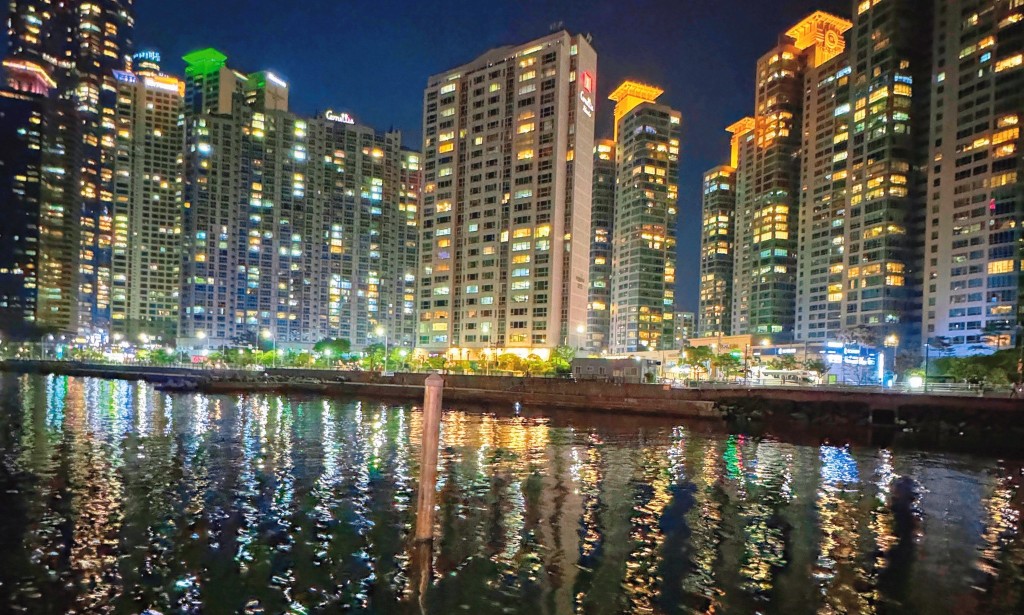

Perched on the southeastern tip of the Korean Peninsula, Busan is South Korea’s second-largest city, with a population of 3.4 million, and its premier port—a strategic gateway to Northeast Asia and the rest of the world. Spanning 769 square kilometers, Busan is bordered by the Korea Strait to the south, the city of Ulsan to the north, and Gimhae to the west, with a rugged coastline stretching 412 kilometers. Its geography—mix of mountainous terrain, golden beaches, and a bustling natural harbor—has shaped its identity as a dynamic, resilient city that blends maritime tradition with modern innovation. Unlike Seoul, Busan has a laid-back coastal vibe, with locals embracing a lifestyle centered around the sea, seafood, and outdoor activities.
Geographically, Busan boasts a temperate climate with four distinct seasons, influenced by its coastal location. Summer (June to August) is warm and humid, with average temperatures peaking at 32°C, drawing millions of visitors to its beaches for swimming, beach volleyball, and fireworks festivals. Winter (December to February) is mild, with average temperatures of 3.8°C and rare snowfall, making the city accessible year-round. Spring (March to May) brings cherry blossoms and mild temperatures, while autumn (September to November) offers cool weather and vibrant fall foliage. Annual precipitation averages 1,441.9 mm, with most rain falling during the summer monsoon season (July to August). Strong sea breezes from the Korea Strait keep the city cooler in summer and warmer in winter, while also shaping its lush greenery—Busan’s mountains and hills are covered in pine forests, oak trees, and bamboo groves, providing a scenic backdrop to the city’s skyline.
The Port of Busan is the city’s heartbeat and one of the world’s busiest container ports, handling over 20 million TEUs (twenty-foot equivalent units) annually. Established in 1876 when Korea opened its ports to foreign trade under the Treaty of Ganghwa, the port has grown from a small fishing harbor to a global logistics hub, connecting Northeast Asia to Europe, North America, and Southeast Asia. The port’s strategic location—within a 3-hour sailing distance of major Japanese ports like Osaka and Kobe, and a 10-hour flight from major Chinese cities—makes it a critical link in the global supply chain. The port complex includes several terminals, including the Busan New Port, a state-of-the-art facility opened in 2006 to handle large container ships. Beyond its commercial importance, the port is a popular tourist attraction, with the Busan Port Cruise Terminal offering cruises along the coast, and the Jagalchi Fish Market, adjacent to the port, serving as a symbol of Busan’s maritime culture.
Jagalchi Fish Market, founded in 1927, is the largest seafood market in South Korea and one of the most famous in Asia. Spanning two floors and covering 42,000 square meters, the market is a sensory feast—stalls overflow with fresh seafood, from wriggling octopus and plump king crab to glistening sashimi and dried fish. Visitors can wander through the market’s narrow alleys, bargaining with vendors for the day’s catch, or sit down at one of the market’s 500+ restaurants to savor seafood cooked to order. Popular dishes include hoe (fresh sashimi), hoe-deopbap (sashimi rice bowl), and gopchang (grilled intestines). Jagalchi is not just a commercial hub but a cultural institution, reflecting Busan’s deep connection to the sea. The market hosts annual events like the Jagalchi Seafood Festival, which features seafood tastings, cooking demonstrations, and traditional performances. For a unique experience, visitors can try “hoe experience” programs, where they learn to prepare sashimi from local chefs or even catch their own octopus at the market’s live tanks.
Busan’s cultural scene is as vibrant and diverse as its population, with a mix of traditional and modern attractions. The Busan International Film Festival (BIFF), launched in 1996, is Asia’s premier film event and one of the world’s top 10 film festivals, attracting over 100,000 visitors annually, including celebrities, directors, and cinephiles from around the globe. Held every October, BIFF screens over 300 films from 70+ countries at venues across the city, including the Busan Cinema Center—a futuristic building with a 1,000-seat outdoor theater and a roof shaped like a wave. The festival has helped put Busan on the global cultural map and has spawned a thriving independent film scene in the city, with numerous indie cinemas and film schools.
Another cultural landmark is the Gamcheon Culture Village, a hillside neighborhood in western Busan that was once a slum. In 2009, the city launched a revitalization project, inviting artists to paint murals on the neighborhood’s concrete buildings, transforming it into a rainbow-colored “art village.” Today, Gamcheon is one of Busan’s most popular tourist attractions, with narrow streets lined with colorful murals, street art, and quirky cafes. The village offers panoramic views of the Busan Harbor and the surrounding mountains, making it a favorite spot for photographers. Visitors can follow the “Gamcheon Mural Village Trail,” which leads to key artworks, including a giant mural of a cat, a rainbow staircase, and a wall painted to look like a comic book. The village also hosts art workshops, exhibitions, and cultural events throughout the year, celebrating local creativity and community spirit.
For history buffs, Busan is home to several important historical sites, including Haedong Yonggungsa Temple—one of Korea’s rare coastal Buddhist temples. Built in 1376 during the Goryeo Dynasty, the temple sits on a cliff overlooking the sea, with its main hall, pagodas, and statues set against a backdrop of waves crashing against the rocks. Unlike most Korean temples, which are located in mountains, Haedong Yonggungsa embraces the sea, with Buddhist scriptures carved into the rocks and a statue of Buddha overlooking the water. The temple is especially beautiful at sunrise, when the first light of day illuminates the sea and the temple’s golden roof. Another historical site is the Busan Modern History Museum, which showcases the city’s history from the late 19th century to the present, including its role as a refuge during the Korean War (1950–1953). During the war, Busan served as South Korea’s temporary capital, and the museum displays artifacts, photographs, and personal stories from this period, highlighting the city’s resilience.
Busan’s beaches are among its most popular attractions, drawing locals and tourists alike. Haeundae Beach, located in the upscale Haeundae District, is South Korea’s most famous beach, stretching 1.5 kilometers along the coast. With its golden sand, clear water, and vibrant atmosphere, Haeundae is packed during summer, with beachgoers enjoying swimming, sunbathing, and water sports like jet skiing and parasailing. The beach also hosts the Haeundae Beach Festival every August, featuring fireworks displays, K-pop concerts, and beach volleyball tournaments. Gwangalli Beach, located in the Gwangalli District, is another popular spot, known for its 2.4-kilometer-long waterfront and the Gwangan Bridge—a suspension bridge illuminated at night with colorful lights. Gwangalli’s waterfront is lined with cafes, bars, and restaurants, making it a favorite spot for locals to relax and socialize. In winter, the beach transforms into a “winter wonderland” with ice skating rinks, Christmas markets, and light displays.
Busan’s cuisine is a reflection of its coastal location, with seafood taking center stage. In addition to Jagalchi Market’s offerings, the city is known for dishes like dwaeji gukbap (pork bone soup with rice), milmyeon (cold noodles), and hotteok (sweet pancakes filled with nuts and honey). The city’s neighborhoods each have their own culinary specialties: Nampodong, Busan’s traditional shopping district, is famous for street food like tteokbokki (spicy rice cakes) and odeng (fish cakes); Haeundae offers upscale seafood restaurants and international cuisine; and Seomyeon is known for its nightlife and casual eateries. Busan’s craft beer scene is also thriving, with local breweries offering unique flavors inspired by the sea, such as sea salt beer and seafood-infused ale.
More than just a port city, Busan is a place where tradition and modernity coexist, where mountain meets sea, and where global trade blends with local charm. Whether exploring the bustling markets, relaxing on the beaches, or immersing oneself in the city’s cultural scene, Busan offers a unique glimpse into Korean coastal life—dynamic, welcoming, and deeply connected to the sea.
You must be logged in to post a comment.