


Nestled in the southeastern corner of South Korea’s Gyeongsangbuk-do Province, Gyeongju was the capital of the Silla Dynasty (57 BCE–935 CE), a kingdom that unified the Korean Peninsula in 668 CE and ruled for nearly three centuries—one of the longest continuous dynasties in East Asian history. Today, this city of 260,000 residents is often called a “museum without walls,” where ancient ruins blend seamlessly with modern life, earning it the title “Beautiful Gyeongju” and a spot on UNESCO’s World Heritage List. Spanning 1,324 square kilometers, Gyeongju’s landscape is shaped by the Silla Dynasty’s political, cultural, and religious prosperity, with palaces, tombs, temples, and astronomical wonders dotting rolling hills and fertile valleys.
The Gyeongju National Museum, founded in 1945, is the gateway to understanding Silla’s legacy and one of South Korea’s most important cultural institutions. Housed in a sprawling complex of traditional Korean-style buildings surrounded by gardens, the museum houses over 80,000 artifacts unearthed from Gyeongju’s ruins, ranging from royal treasures to everyday objects. Its star exhibit is the Golden Crown of Geumgwanchong Tomb, a masterpiece of Silla metalwork crafted in the 5th century CE. Made of pure gold and adorned with jade pendants, glass beads, and delicate filigree, the crown features antler-like branches that symbolize the shamanistic beliefs of the early Silla kings, who were revered as divine beings. The crown, which weighs just 700 grams, is a testament to Silla’s advanced metalworking techniques and its access to precious materials through trade with China and Japan. The museum’s three permanent halls—Archaeology Hall, Art Hall, and History Hall—trace the Silla Dynasty’s rise to power, its flourishing Buddhist art, and the daily lives of its people. The outdoor gallery displays national treasures like the Emille Bell, a 7.7-meter-tall bronze bell cast in 771 CE. Renowned for its clear, resonant sound that can be heard 10 kilometers away, the bell is inscribed with Buddhist scriptures and intricate patterns of dragons and lotus flowers, reflecting Silla’s devotion to Buddhism.
No visit to Gyeongju is complete without a trip to Cheomseongdae, East Asia’s oldest surviving astronomical observatory and a symbol of Silla’s scientific prowess. Built in the 7th century CE during the reign of Queen Seondeok (r. 632–647 CE)—one of Korea’s only female rulers—the 9.4-meter-tall stone tower is a marvel of ancient engineering. Constructed from 365 granite stones (one for each day of the year), the tower has 27 steps leading to the top (honoring Queen Seondeok, the 27th monarch of Silla) and 24 divisions around its base (aligning with the 24 solar terms of the traditional East Asian calendar). The tower’s cylindrical shape and narrow window at the top allowed astronomers to track the movement of the sun, moon, and stars, predicting seasons, eclipses, and celestial events that guided agricultural and religious practices. Unlike other ancient observatories, which were often built for astrological purposes, Cheomseongdae was a scientific instrument, demonstrating Silla’s advanced understanding of astronomy and mathematics. Today, it stands in the center of Gyeongju’s downtown area, surrounded by cherry blossom trees, and remains a source of pride for Koreans as a symbol of their ancient intellectual achievements.
The Daereungwon Tomb Complex, a 126,500-square-meter park on the outskirts of Gyeongju, is home to 23 Silla royal tombs—earthen mounds that rise like small hills from the landscape. These tombs, built between the 5th and 7th centuries CE, were reserved for Silla kings, queens, and nobility, and their size and location reflect the dynasty’s social hierarchy. The most famous tomb in the complex is Cheonmachong (Heavenly Horse Tomb), named after a painted horse motif found on a saddle cloth during its excavation in 1973. Unlike most Silla tombs, which were looted centuries ago, Cheonmachong remained intact, yielding over 11,500 artifacts, including golden crowns, jewelry, weapons, and household items. It is the only royal tomb in Gyeongju open to the public, allowing visitors to descend into the stone chamber and see the tomb’s interior, where the royal burial chamber is lined with wooden planks and adorned with murals. Nearby, Hwangnamdaechong (Great South Tomb) is the largest tomb in Gyeongju, measuring 80 meters in diameter and 22 meters in height. Excavated in 1970, it yielded 57,000 artifacts, including two golden crowns, suggesting it was the tomb of a royal couple. The artifacts from these tombs, now on display at the Gyeongju National Museum, offer a vivid glimpse into Silla’s royal lifestyle, wealth, and artistic achievements.
Gyeongju’s cultural heritage extends beyond man-made structures to include natural landscapes that were revered by the Silla people. Wolji Pond (Anapji), a royal garden built in 674 CE during the reign of King Munmu, is a masterpiece of Korean landscape design, blending water, stone, and vegetation to create a serene retreat for the royal family. The pond, which covers 12,000 square meters, is surrounded by pavilions, bridges, and cherry blossom trees, and its waters reflect the surrounding hills and sky. Archaeological excavations of Wolji Pond have uncovered over 30,000 artifacts, including pottery, jewelry, and musical instruments, indicating that it was used for royal banquets, festivals, and religious rituals. Today, Wolji Pond is one of Gyeongju’s most popular attractions, especially at night, when the pavilions and bridges are illuminated, creating a magical scene that transports visitors back to the Silla Dynasty. Another natural landmark with cultural significance is Woljeonggyo Bridge, a wooden bridge spanning the Namcheon River. Originally built in the 7th century, the bridge was destroyed during the Joseon Dynasty and rebuilt in 2018 after 10 years of research using traditional techniques and materials. It is linked to the legendary love story of Monk Wonhyo, a famous Buddhist scholar, and Princess Yoseok, adding a romantic layer to its historical significance.
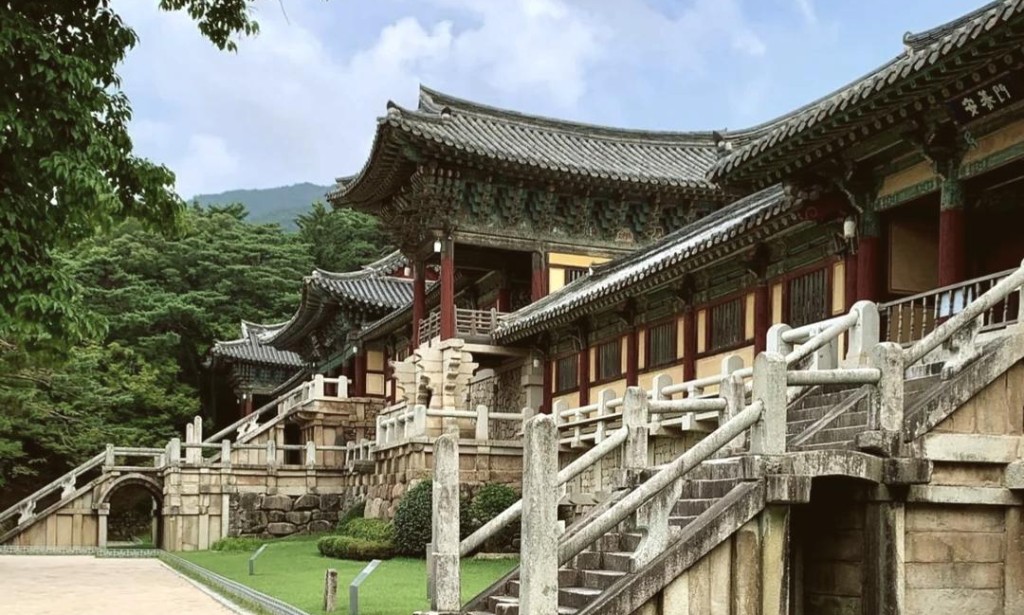
Gyeongju’s charm lies in its tranquility and the way it preserves Silla’s legacy while embracing modern life. The city’s downtown area is lined with traditional hanok guesthouses, cafes, and restaurants serving authentic Korean cuisine, including hwangnam-ppang (a sweet bun filled with red bean paste, a Gyeongju specialty) and silla seolleongtang (beef bone soup). Visitors can stroll along cherry-blossom-lined paths in spring, hike to the top of Namsan Mountain to see ancient Buddhist rock carvings, or visit Bulguksa Temple, a UNESCO World Heritage Site located 10 kilometers outside Gyeongju. Bulguksa Temple, built in 751 CE, is one of Korea’s most beautiful Buddhist temples, with intricate wooden pavilions, stone bridges, and statues set against a backdrop of mountains. The temple’s Seokgatap and Dabotap pagodas, made of granite, are masterpieces of Silla architecture, symbolizing the harmony between Buddhism and Confucianism.
Beyond its well-known landmarks, Gyeongju is home to lesser-known gems that offer a deeper insight into Silla culture. The Seokguram Grotto, a UNESCO World Heritage Site located on the slopes of Tohamsan Mountain, is a rock-cut Buddha statue carved in the 8th century. The 3.2-meter-tall statue of Buddha Amitabha sits in a circular chamber, illuminated by natural light streaming through a small window, creating a serene and神圣 atmosphere. The grotto, which took 24 years to build, is a testament to Silla’s advanced stone-carving techniques and its devotion to Buddhism. The Gyeongju Folk Village, a living museum, showcases traditional Korean life during the Joseon Dynasty, with thatched-roof houses, farmyards, and craft workshops where visitors can watch artisans make pottery, weaving, and traditional musical instruments. Whether exploring ancient tombs, wandering through royal gardens, or meditating at a Buddhist temple, Gyeongju offers a unique journey through Korea’s past, where the Silla Dynasty lives on in every stone, every tree, and every tradition.
You must be logged in to post a comment.